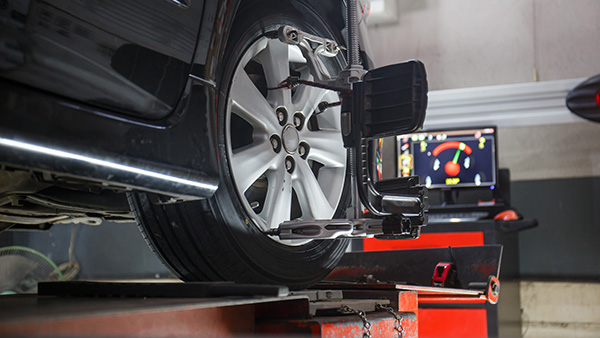
A car that pulls to one side can be annoying in a way that’s hard to explain. Sometimes it’s subtle, like you’re always nudging the wheel back, and other times it feels like the car is actively steering for you. The tricky part is that the cause isn't always what people expect, and it can change depending on the road you’re on. If you want to fix it for real, the first step is figuring out what kind of pull you have.
Start by noticing the pattern before you chase the fix.
Start With The Pull Pattern
Begin on a straight, flat stretch of road where traffic is light, and keep your grip relaxed but ready. If the car consistently drifts to the same side within a couple of seconds, that’s a stronger clue than a slow drift that takes half a block. Pay attention to whether it happens more during acceleration, braking, or steady cruising.
Next, notice whether the steering wheel sits off-center when you’re trying to drive straight. An off-center wheel often points toward an alignment shift, but it can also happen after tire changes or suspension work. We see a lot of pulls that are really a combination of small factors, which is why the pattern matters.
Tire Pressure And Tire Wear Clues
Tire pressure is the fastest thing to check, and it can create a pull even when everything else is fine. A tire that’s a few PSI low can change rolling resistance enough to tug the car, especially on the front axle. It’s also worth checking that the tire sizes match and that no tire is a different model with a more aggressive tread on one side.
Tire condition can point you in the right direction if you know what to look for. Check for these issues before you assume it’s an alignment problem:
- Uneven wear on one edge of a front tire
- A sidewall bubble from a pothole hit
- A tire that keeps losing air between checks
- Cupping or scalloped wear that feels bumpy by hand
- A wheel that looks bent at the lip
If the pull started right after a tire rotation or new tires, a tire itself could be the culprit. Swapping the front tires side to side can sometimes change the direction of the pull, which is a big hint. If the pull changes direction after that swap, the tire or wheel is often part of the story.
Alignment Angles That Cause Drift
Alignment is more than just making the steering wheel look straight. Toe, camber, and caster all affect how the car tracks down the road and how it returns to center after a turn. A small shift in one angle can create a steady drift that feels like you’re always correcting.
Road impacts are a common cause, especially after winter potholes or curb taps. Even if nothing looks bent, an angle can move enough to change how the tires meet the pavement. If you’re also seeing uneven tire wear, alignment jumps higher on the list.
Brake Drag And Bearing Trouble
A sticking brake caliper can make a car pull, and it can also create heat you may smell after a drive. Sometimes a brake hose collapses internally and holds pressure, so one pad drags more than it should. That drag can tug the car and wear one side faster without an obvious warning.
Wheel bearing problems can also change how a car feels, especially if the bearing has play or is running rough. You might hear a growl that changes with speed, or the sound gets louder when you gently steer one way. If the pull shows up with a new noise, bearing and brake checks are worth doing early.
Steering And Suspension Wear Points
Loose steering or suspension parts can let the wheel shift under load, which changes the direction the tire is pointing as you drive. Tie rod ends, ball joints, control arm bushings, and strut mounts are common places for that movement to start. Even a little play can make the car feel inconsistent, especially over bumps or during lane changes.
This is also why a pull can come with a vague steering feel. If the vehicle feels less stable on the highway and the tires are wearing oddly, there’s often wear underneath that needs attention before an alignment will hold. Staying consistent with regular maintenance like tire rotations and chassis checks makes these issues easier to catch while they’re still small.
When Road Crown Is The Real Reason
Some roads are built with a slight slope so water drains off, and that can create a mild drift even when the car is fine. Wind, pavement grooves, and heavily crowned lanes can exaggerate it, which is why the pull can feel worse on one route and better on another. If the car only drifts on certain roads and feels straight elsewhere, that’s a useful clue.
A quick inspection can confirm whether the pull is coming from tires, alignment angles, brake drag, or looseness in steering components. The goal is to fix what’s actually causing it, not to mask it with constant steering correction. Once the cause is clear, the repair path is usually straightforward.
Get Pulling And Alignment Service In Santa Monica, CA, With 26th Street Auto Center
If your car keeps drifting or the steering wheel never feels centered, 26th Street Auto Center in Santa Monica, CA, can pinpoint what’s causing the pull and recommend the right fix.
Set up a visit and get back to driving straight without the constant correction.