When the A/C stops cooling, a recharge can sound like the quickest answer. If another shop added refrigerant recently, however, paying for the same service again raises a useful question: what will keep the cooling from fading this time? Replacing lost refrigerant and finding the source of the loss are different jobs.
A professional service should explain whether the system is low, why it reached that conclusion, and what testing is included. Weak cooling can also involve airflow, fans, electrical controls, or the compressor, so don't add refrigerant automatically just because the vents feel warm.
An A/C Recharge Restores the Specified Refrigerant Amount
Refrigerant moves heat through the A/C system. Too little can reduce cooling, while too much can also cause poor performance. A proper recharge uses the refrigerant specified for the vehicle and the correct quantity, generally measured by mass. Gauge pressure alone doesn't reliably indicate how much refrigerant is already inside.
Depending on the work, the service may involve recovering existing refrigerant, evacuating the system, and charging the specified amount. Ask exactly what is included in the quoted service. An added can at home may change pressures or contain additives without confirming whether the charge is correct or why it was low.
A/C Leak Testing Looks for Where Refrigerant Escapes
The system can leak at hoses, connections, service valves, the condenser, compressor, or evaporator. A leak may leave an oily trace, but many are too small or inaccessible to identify through a quick visual check. Leak testing aims to locate evidence that supports a specific repair.
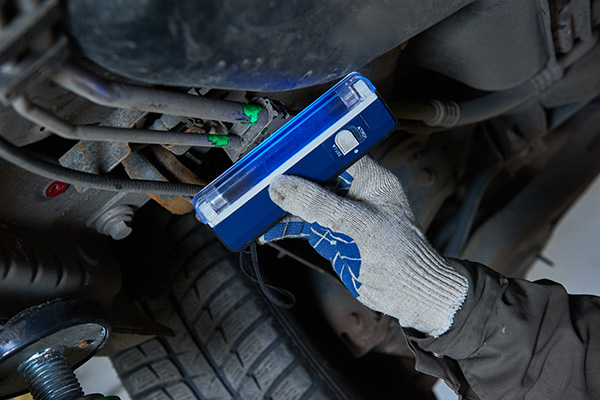
Electronic detection, compatible fluorescent dye, or another approved method may be used depending on the system and conditions. A small leak can require more than one check or time to become visible. The technician should explain what was found, what remains uncertain, and whether an accessible component or a more involved assembly needs attention.
A Vacuum Check Does Not Find Every A/C Leak
Evacuating the system helps remove air and moisture after the required service work. A vacuum-hold check can reveal some leaks, but it doesn't prove the system will hold refrigerant under every operating condition. A seal can behave differently under positive pressure, heat, vibration, or compressor operation.
For that reason, a recharge that passes a vacuum check may still lose refrigerant later. Repeated loss over a short period deserves further leak testing. Simply adding another charge can restore cooling temporarily while leaving the same damaged seal or component in place.
Poor A/C Cooling Can Have a Different Cause
A weak blower or restricted cabin filter can reduce the amount of cool air reaching the cabin. A condenser fan problem may cause cooling to fall off at idle. Blend-door controls can mix warm air into the vents even when the refrigerant circuit is operating correctly. Those faults call for different repairs.
Testing can include vent temperature, airflow, fan operation, pressures, electrical commands, and the amount of refrigerant recovered. The complaint pattern matters: cooling only while moving, weak airflow everywhere, or a problem that began after a previous service each offers a different starting point.
A/C Service Pricing Reflects Testing, Access, and Materials
Leak testing involves technician time and suitable equipment, while refrigerant recovery and recharging involve separate procedures and materials. Refrigerant type and system capacity can change the cost. Access also affects a repair; replacing an accessible seal differs greatly from reaching an evaporator located inside the dashboard.
A lower recharge quote may cover less testing than a service intended to find and repair a recurring leak. Compare the actual work included rather than the service name alone. Ask whether the estimate includes leak confirmation, repairs, the correct recharge, and a completed performance check, or whether some of those items are separate.
A/C Repair Should Be Checked After Recharging
After the leak repair is complete, service and test the system using the required procedure. That includes verifying cooling performance under appropriate conditions and checking the repaired area. A successful recharge shows the system can cool with the correct charge; follow-up checks help confirm the source of the loss was addressed.
Tell the shop about any sealant or recharge product previously added. Some additives can affect equipment or components and change how you service the system. Keep dates of earlier recharges so you can understand the rate of recurring loss without relying on a vague memory of when the air last felt cold.
Get A/C Leak Testing in Santa Monica, CA, With 26th Street Auto Center
If the A/C has warmed up again after a recharge, 26th Street Auto Center in Santa Monica, CA, can inspect cooling performance and find the source of refrigerant loss. We can explain which tests are appropriate, what the findings show, and whether the next step is a leak repair or another type of A/C service.
Contact us to schedule an A/C inspection and mention any recent recharge work.